

Updated May 2026 · 9-min read
Aramid vs Kevlar vs Carbon Fiber vs UHMWPE in one paragraph:
Aramid is the chemistry — a family of strong, heat-resistant synthetic fibers. Kevlar® is DuPont's trademarked brand of para-aramid; Twaron and Nomex are other aramid brands. UHMWPE (Dyneema, Spectra, Pando Moto's Balistex®) is a newer, even tougher fiber — about 15× stronger than steel by weight — now found in premium AAA-rated motorcycle gear. Carbon fiber is excellent for hard parts (helmets, frames) but too brittle for body fabric. For a motorcycle jacket, hoodie, or pants, you want aramid or UHMWPE — and you want to confirm the garment carries a CE rating under EN 17092, not just "Kevlar-lined" marketing copy.
In this guide
Quick answer (what to buy) Common questions What is aramid? Kevlar® and other branded aramids UHMWPE (Dyneema, Spectra, Balistex) Carbon fiber Compare all four How these tie to CE garment ratings
Quick answer · skip the deep dive
If you want gear that uses these fibers correctly — here's exactly what to look for, and what to buy.
Aramid (Kevlar®-lined)
Best for: an everyday hoodie that lasts a slide
A Kevlar®-lined hoodie keeps the casual look but adds the abrasion resistance Kevlar® is famous for. Beyond Riders pairs Kevlar® lining with a high-vis reflective upper for night riding. Wear armor inserts underneath for full protection.
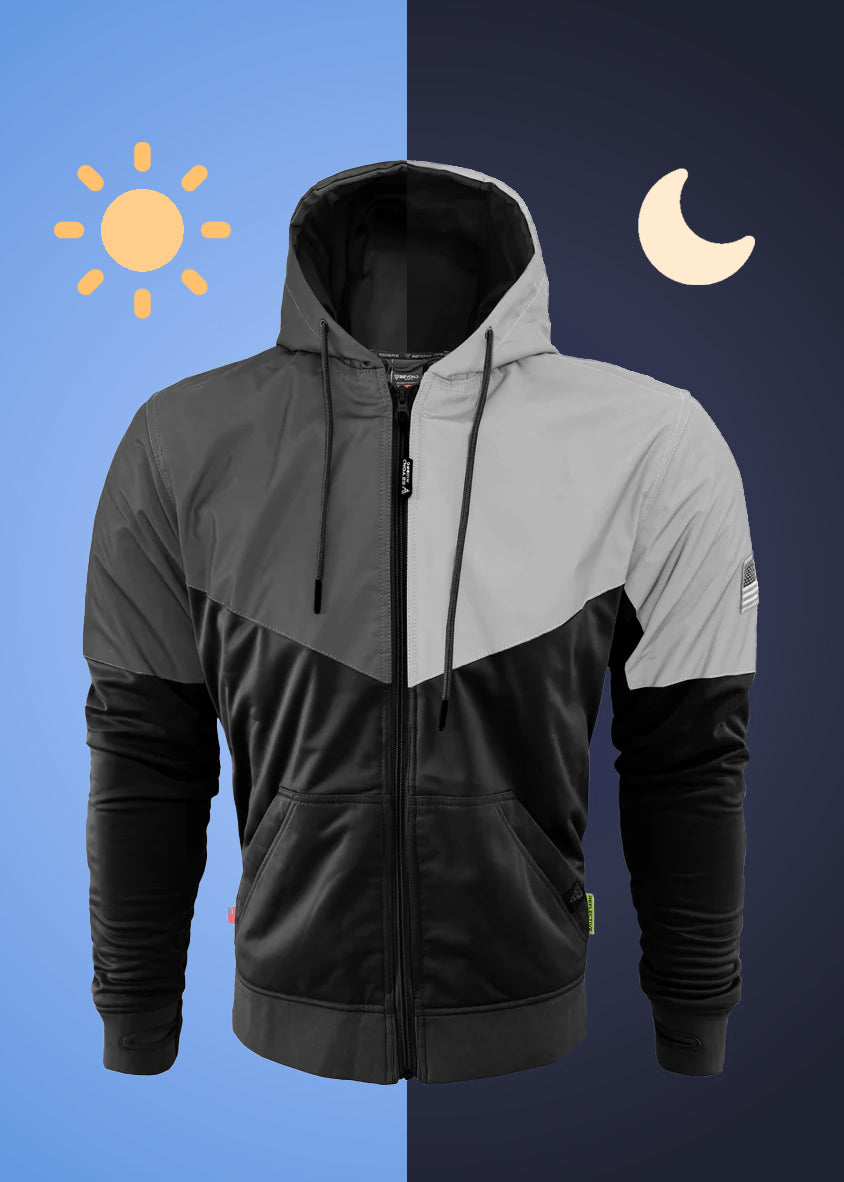
Beyond Riders · Kevlar-lined
Ultra Reflective Hoodie
$245 →
UHMWPE — the modern fiber
Best for: top-tier slide protection, worn under anything
UHMWPE is roughly 15× stronger than steel by weight and tougher in abrasion tests than Kevlar®. Pando Moto's Balistex® is their branded UHMWPE blend. The Shell UH 03 is a dual-rated armored base layer: CE Level 1 impact armor + CE AA garment rating under EN 17092. Wear it under whatever you want.
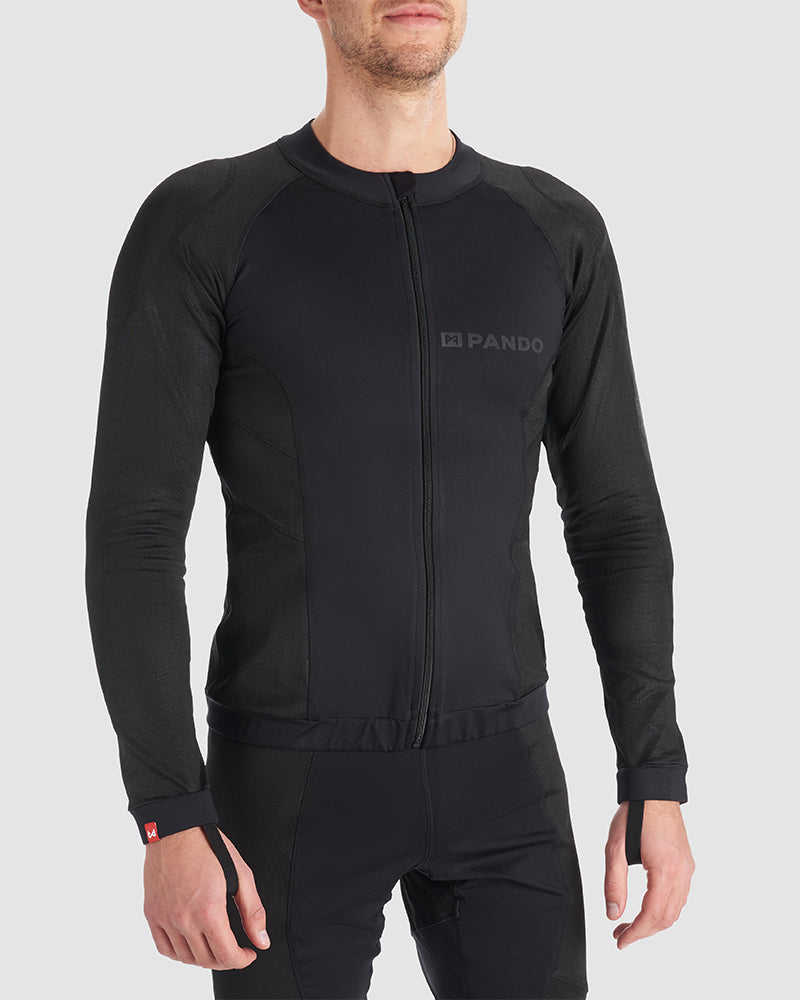
Pando Moto · UHMWPE · CE AA
Shell UH 03 Armored Base Layer
$399 →
Cordura® + UHMWPE blend
Best for: AAA-rated pants you can actually wear
The strongest CE garment rating is AAA under EN 17092 — typically reserved for full leathers and track suits. Pando Moto gets there in a cargo-cut pant by combining Cordura® super-stretch denim with Balistex® (UHMWPE) lining in high-risk zones. D3O® Ghost™ Level 1 hip and knee armor included.

Pando Moto · Cordura + UHMWPE · CE AAA
Mark Olive AAA Cargo Jeans
$386 →
What about carbon fiber?
Skip it for body fabric. It's a hard-parts material.
Carbon fiber is stronger than aramid in tension and incredibly stiff for its weight — that's why it's used in motorcycle helmets, frames, and impact-resistant shells. But fabric needs to flex without shattering, and carbon fiber is brittle. If a hoodie or jacket markets "carbon fiber" as its protective material, that's almost always either a decorative weave or a small reinforcement panel, not the load-bearing slide protection. For body protection, aramid (Kevlar®) and UHMWPE are the real answers.
Want the chemistry behind each — why UHMWPE is 15× stronger than steel, what makes Kevlar® bond, where carbon fiber wins, and how all of this connects to the CE garment standard? Keep scrolling → Or jump to common questions.
Common questions
Is aramid the same as Kevlar®?
Essentially yes. Aramid is the chemistry — a family of synthetic fibers made of long-chain aromatic polyamide molecules. Kevlar® is DuPont's specific trademarked brand of para-aramid fiber. So "Kevlar®" is to "aramid" what "Kleenex" is to "tissue" — same thing, one is a brand name. Other aramid brands include Twaron (Teijin), Nomex (DuPont's flame-resistant variant), and Technora (Teijin).
Is Kevlar® bulletproof?
Kevlar® is used in bullet-resistant vests, but the gear sold for motorcycles isn't ballistic-rated. A "Kevlar®-lined" riding jacket is designed to resist abrasion and tearing in a slide — not stop a bullet. The same fiber chemistry is woven differently and in different thicknesses for different jobs.
What's the difference between Kevlar® and UHMWPE?
UHMWPE (Ultra-High Molecular Weight Polyethylene) is a different polymer entirely — long chains of polyethylene rather than aramid. By weight, UHMWPE is about 15× stronger than steel and outperforms Kevlar® in slide and abrasion testing. It's also lighter and more flexible. UHMWPE is showing up in premium motorcycle gear under brand names like Dyneema®, Spectra®, and Pando Moto's Balistex®.
Is UHMWPE better than Kevlar® for motorcycle gear?
In a head-to-head abrasion test, UHMWPE typically wins on strength-to-weight and abrasion resistance — which is why UHMWPE-woven garments tend to earn higher CE garment ratings (AAA in EN 17092). Kevlar® is still excellent and has a 60-year track record. Practically: if you can afford UHMWPE gear, it's the better protection per gram. Kevlar® is the more affordable, more widely available choice and remains very effective.
What's the difference between aramid and carbon fiber?
Carbon fiber is stronger than aramid in tension and much stiffer, but it's brittle — under enough force it shatters rather than flexes. Aramid stretches and absorbs energy before failing, which is exactly what you want in a slide. Carbon fiber's stiffness makes it ideal for rigid structures (helmets, motorcycle frames, body panels). Aramid's flex makes it ideal for fabric.
Why isn't carbon fiber used in motorcycle jackets?
Because clothing has to bend with your body. Carbon fiber doesn't. It can be woven into fabric in small reinforcement panels (some race suits do this for visual effect or minor stiffening), but as the load-bearing slide-protection layer it would crack on the first impact and offer no abrasion resistance once cracked. If a hoodie or jacket markets "carbon fiber" as protection, it's almost certainly decorative or structural reinforcement, not the actual slide-protection layer.
What does "Kevlar®-lined" actually mean on a jacket label?
It usually means a layer of Kevlar® fabric is sewn into the high-abrasion zones of the garment — typically elbows, shoulders, back panel, and sometimes the seat. The outer shell might be cotton, polyester, or denim; the inner Kevlar® layer is what does the abrasion work in a slide. Importantly, "Kevlar®-lined" is a marketing claim — it doesn't guarantee a CE rating. To know how well the lining actually performs in a slide, look for an EN 17092 class (A, AA, or AAA) on the label.
How do these fibers connect to CE garment ratings?
The CE garment standard EN 17092 rates a complete riding garment on slide, abrasion, tear, and seam strength — not just one panel. Aramid-lined and UHMWPE-woven garments are typically what allow a piece to earn AA or AAA. But the rating is on the finished garment, not the fiber alone. A jacket with aramid lining might earn A, AA, or no rating at all depending on construction, coverage, and seam quality. Always look for the EN 17092 class on the label, not just the fiber name. We break this down in our companion piece on CE Level 1 vs Level 2 armor — that piece covers the EN 1621 impact side; EN 17092 is the slide side.
Want the full picture? Below: the chemistry behind each fiber, the Kwolek/DuPont origin story for Kevlar®, what makes UHMWPE different, where carbon fiber actually belongs, a four-way comparison table, and how all of this maps to the EN 17092 CE garment standard. Keep reading ↓
What is aramid?
Aramid is the short name for aromatic polyamide — a class of synthetic fibers built from long polymer chains where rigid aromatic ring structures are linked by amide bonds. The structure matters: those aromatic rings line up to form strong hydrogen bonds between adjacent chains, and the result is a fiber with very high tensile strength, low stretch, and excellent heat resistance.
In numbers: aramid fibers are roughly five times stronger than steel by weight and start to lose strength only above 700°F. Compared to nylon or polyester (the everyday synthetics), aramid is in a completely different performance class.
There are two main families. Para-aramids (Kevlar®, Twaron, Technora) are the load-bearing strength fibers used in ballistic vests, cut-resistant gloves, and motorcycle abrasion linings. Meta-aramids (Nomex) are flame-resistant, used in firefighter turnout gear and race suits. For motorcycle slide protection, the para-aramid family is what you'll encounter.
Kevlar® and other branded aramids
Kevlar® is DuPont's trademarked brand of para-aramid, invented by DuPont chemist Stephanie Kwolek in 1965. Kwolek was working on a lightweight fiber to replace steel wire in car tires (the original goal was fuel efficiency, not body armor). The fiber she developed turned out to be five times stronger than steel by weight — and DuPont quickly recognized the implications for protective gear.
Other para-aramid brands exist and perform similarly:
- Twaron® — made by Teijin (Netherlands/Japan). Used in body armor and motorcycle gear interchangeably with Kevlar®.
- Technora® — Teijin's co-polymer aramid with slightly better chemical resistance.
- Nomex® — DuPont's meta-aramid. Less tensile strength than Kevlar® but inherently flame-resistant; used in race suits and firefighter gear.
When a motorcycle product label says "Kevlar®-lined," it specifically means DuPont's brand. When it says "aramid lining" or doesn't name the supplier, it's likely Twaron® or generic para-aramid — performing very similarly. The chemistry is the same; the brand difference is mostly licensing.
UHMWPE (Dyneema®, Spectra®, Balistex®)
UHMWPE — Ultra-High Molecular Weight Polyethylene — is a different polymer family entirely. Where aramid is built from aromatic ring structures, UHMWPE is long parallel chains of polyethylene. The "ultra-high molecular weight" part means each chain is enormously long compared to standard polyethylene, which produces extreme strength when the chains are aligned during fiber spinning.
By weight, UHMWPE is approximately 15× stronger than steel and meaningfully tougher than aramid in head-to-head abrasion testing. It's also more flexible, doesn't absorb water, and has a higher cut resistance. The trade-offs: UHMWPE has a lower melting point than aramid (the chains start losing alignment around 280°F) and tends to be more expensive.
Common brand names you'll encounter:
- Dyneema® — made by DSM/Avient. The most recognized UHMWPE brand globally.
- Spectra® — Honeywell's UHMWPE. Functionally similar to Dyneema®.
- Balistex® — Pando Moto's branded UHMWPE blend, found in their Shell UH 03, Skin UH AAA, and Mark Olive AAA garments.
In motorcycle gear, UHMWPE is the fiber driving the recent jump in premium garment-level CE ratings. A jacket or base layer woven with UHMWPE can reach EN 17092 AAA — the highest CE garment rating — in form factors that previously required full leathers.
Carbon fiber — when it makes sense, when it doesn't
Carbon fiber is made from carbon atoms bonded in crystalline structures along the fiber axis. The result is a fiber with extreme tensile strength, very high stiffness, and very low weight. In rigid composites (helmets, frames, panels), carbon fiber is unmatched on a strength-to-weight basis.
But fabric needs to flex without failing. Carbon fiber is brittle — under enough strain it shatters rather than stretching. That makes it perfect for a helmet shell (rigid, dissipates impact energy by cracking in a controlled way) and wrong for a hoodie sleeve (would crack on the first hard movement and offer zero abrasion resistance once cracked).
Where you'll see carbon fiber on motorcycle gear:
- Helmet shells — Arai, Shoei, AGV's carbon-fiber lines. The shell cracks in controlled ways during impact, absorbing energy.
- Reinforcement panels — small carbon-fiber inserts in racing leathers for shoulder and knee sliders, more for stiffening than primary protection.
- Motorcycle parts — frames, fairings, exhaust shrouds. Stiffness and weight matter; abrasion doesn't.
When a jacket or hoodie advertises "carbon fiber" prominently in the marketing copy for body fabric, it's almost always a decorative weave (cosmetic) or a small reinforcement panel, not the load-bearing slide protection. The slide protection in those garments still comes from aramid or UHMWPE — and that's what you should look for on the label.
Compare all four
| Fiber | Strength vs steel (by weight) | Flex behavior | Best motorcycle use |
|---|---|---|---|
|
Aramid Kevlar®, Twaron® |
~5× stronger | Stretches and absorbs energy before failing | Jacket / hoodie / glove abrasion linings (A or AA-rated gear) |
|
UHMWPE Dyneema®, Spectra®, Balistex® |
~15× stronger | Stretches, absorbs energy, lighter than aramid | Premium gear that earns AAA garment rating; base layers and high-end jackets |
| Carbon Fiber | ~10× stronger in tension, but brittle | Shatters under enough force; no abrasion resistance once cracked | Helmet shells, hard reinforcement panels, motorcycle parts — NOT body fabric |
|
Cordura® (for context) |
High-tenacity nylon (not aramid) | Highly abrasion-resistant base fabric, flexible | Outer shell of jackets and jeans; often paired with aramid or UHMWPE lining for full slide protection |
The takeaway: for motorcycle clothing that has to flex with your body and survive an asphalt slide, aramid or UHMWPE are the only real answers. Cordura® often appears as the abrasion-resistant outer shell paired with one of those two as the inner lining or weave. Carbon fiber belongs in your helmet shell, not your hoodie sleeve.
How these fibers tie to the CE garment standard
A jacket can be lined with aramid or UHMWPE and still not be rated under EN 17092, the European CE standard for motorcycle garment protection. The standard tests the complete garment — abrasion, tear, seam strength, impact resistance — not just one panel. So the fiber name on a label is a hint, but the rating on a label is the truth.
The EN 17092 classes from highest to lowest:
- Class AAA — highest. Race-grade and high-end leathers. UHMWPE-woven garments often reach this tier.
- Class AA — sport-touring, commuter, and most Kevlar®-lined premium gear.
- Class A — urban, casual; lower-speed protection.
- Class B — abrasion resistance only, no impact armor requirement.
- Class C — impact protector carrier only (the garment is a vehicle for armor, not protection itself).
CE Levels 1 and 2 — which you'll see on impact armor like back protectors and joint pads — are a different standard (EN 1621). The two work together: EN 1621 rates the armor's impact absorption, EN 17092 rates the garment's slide and tear resistance. We break this down in our CE Level 1 vs Level 2 armor guide.
The buying rule: for any garment, check the label for an EN 17092 class (AAA, AA, or A). If it doesn't have one, the fiber inside doesn't matter — the manufacturer hasn't certified that the finished garment will survive a slide. "Kevlar®-lined" with no rating means the brand is using the fiber but hasn't put the garment through the CE test.
Looking for the gear?
Two of our top dual-rated picks — UHMWPE-woven, CE-rated under both EN 17092 and EN 1621:
Related reading
- CE Level 1 vs Level 2 Motorcycle Armor: A Rider's Complete Guide — the impact-side companion to this slide-side piece
- What does EN 1621-1:2012 mean? — the underlying impact standard explained
- Kevlar vs UHMWPE for motorcycle protection — a deeper UHMWPE-vs-aramid comparison
- How to insert your Level 2 SAS-TEC armor — fit guide for upgrading a stock jacket
Originally published November 10, 2022. Updated May 13, 2026 with the UHMWPE / Balistex® / Dyneema® section, expanded carbon-fiber explanation, four-way comparison table, EN 17092 connection, and FAQ. Reviewed by Dan Wein, founder of Stealth Armor Co.